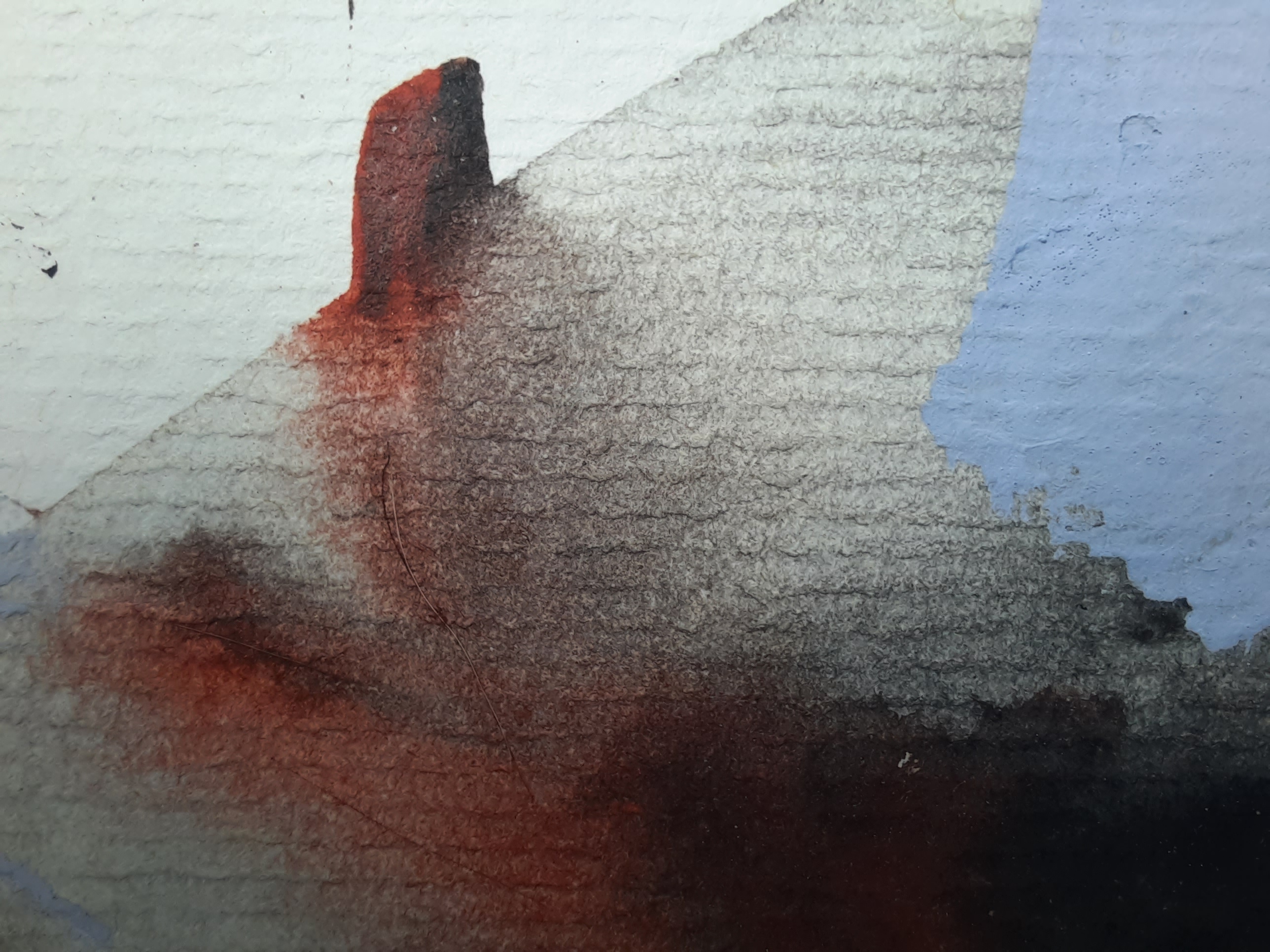
“A painting is music you can see, and music is a painting you can hear.”
“A festmény zene, amit làtsz és a zene festmény, amit hallasz.”
Miles Davis
A MŰVÉSZRŐL
Éri Jenő, grafikus- és festőművész, 1958-ban született Zalaegerszegen.
Az 1960-as évek elején családja Dunaújvárosban telepedett le, ahol szabó-varró mester szülei korán felismerték rajz és ének-zene iránti affinitását. Gyermekkori rajztanára, ifj. Koffán Károly bíztatására, Éri Jenő, művészeti tanulmányait 1972 és 1976 között a budapesti Képző – és Iparművészeti Szakközépiskola, grafika szakán kezdte (tanára: Gacs Gábor). 1976-ban a Magyar Iparművészeti Főiskola (ma: MOME) typo-grafikai tanszékére nyert felvételt (mestere: Ernyei Sándor), amit 1981-ben, tervező grafikusművészként végezett el. Pályáját lemezborítók tervezésével ill. plakáttervezéssel indította, melyért 1989-ben Nívó-díjat kapott. A ’80-as, ’90-es években reklámgrafika területén dolgozott, főként arculatterveket készített, de festményeivel, rajzaival számos csoportos kiállításon is részt vett. 2000-től, egy New York-i tanulmányút hatására, munkássága a képzőművészet felé fordult. 2004-ben, a budapesti Mu Színházban bemutatott Dob-képek című kiállítását követően, főként absztrakt festészettel foglalkozik. 2010 óta számos alkotást készített jazz- és klasszikus zenétől inspirálva. Bartók Béla hagyománya előtt tisztelegve, képeit a Rubato (I. 2014, II. 2019) című kiállításain mutatatt be. Fia tragikus halálát követően, életének 45 éves budapesti fejezetét lezárva, 2019 óta Dunaújvárosban él és alkot. Kortárs Művészeti Intézet (KMI-D) 2021 telén rendezte meg első retrospektív kiállítását AtonálisKottaKépek címmel. 2025-ben Pro Cultura Intercisea díjjal tüntették ki.
Mind a korábbi figuratív-, mind a későbbi absztrakt-gesztus festészetét jellemzően áthatja a zene, a drámaiság és a grafikus lényegretörő vizuális üzenete.
ABOUT THE ARTIST
Jenő ÉRI is a graphic designer and painter born in 1958, in Zalaegerszeg, Hungary.
In the beginning of the 1960s his family settled down in the newly built industrial, working-class city, Dunaújváros. Encouraged by his tailor parents, Jenő Éri, an artistic child was enroled to music school and was taking drawing lessons with visual artist, Kàroly Koffàn jr. who recognised his talent. Éri began his formal art studies in the capital, at the Budapest Secondary School of Fine and Applied Arts between 1972 and 1976 where he was a student of Gàbor Gacs. In 1976 he was admitted to the Hungarian College of Applied Arts (today: MOME), mentored by Sàndor Ernyei (a prominent Hungarian graphic and poster designer in the ’60s &’70s) at the Department of Typography, from where he majored in Graphic Design in 1981. Éri started his career by designing vinyl covers as well as cultural and film posters, for which he received the Award of Excellence in 1989. Although he worked mainly as a graphic designer in the field of advertising and branding in the ’80s and ’90s, he regularly participated in group exhibitions with his paintings and drawings. Influenced by a trip to New York City in 2000 and his exhibition at the Hungarian Cultural House, his focus shifted towards Fine Arts. In 2004, his solo exhibition of a series of abstract jazz drum paintings, entitled “Dob-kèpek” at Mu Theatre in Budapest was a milestone in creating his own distinctive, gestural style. From 2010 onwards, he has worked on a number of canvases, collages and mixed media works inspired by jazz and classical music, with special solo exhibitions dedicated to the compositions of Béla Bartók (Rubato I in 2014, and Rubato II in 2019) . After tragically losing his son, he closed a 45-year long chapter of his life in Budapest and moved back to the city of his childhood, Dunaùjvàros, where he now lives and works. The Institute of Contemporary Arts (KMI-D), held his first retrospective exhibition in the winter of 2021, entitled “AtonalBrushNotes“. In 2025 he received the Pro Cultura Intercisae Award.
Whether his earlier, more figurative paintings or his later, more abstract-gestural ones, much of his work has been infused with music and filtered through a direct visual message of a graphic designer.
 - É R I -